
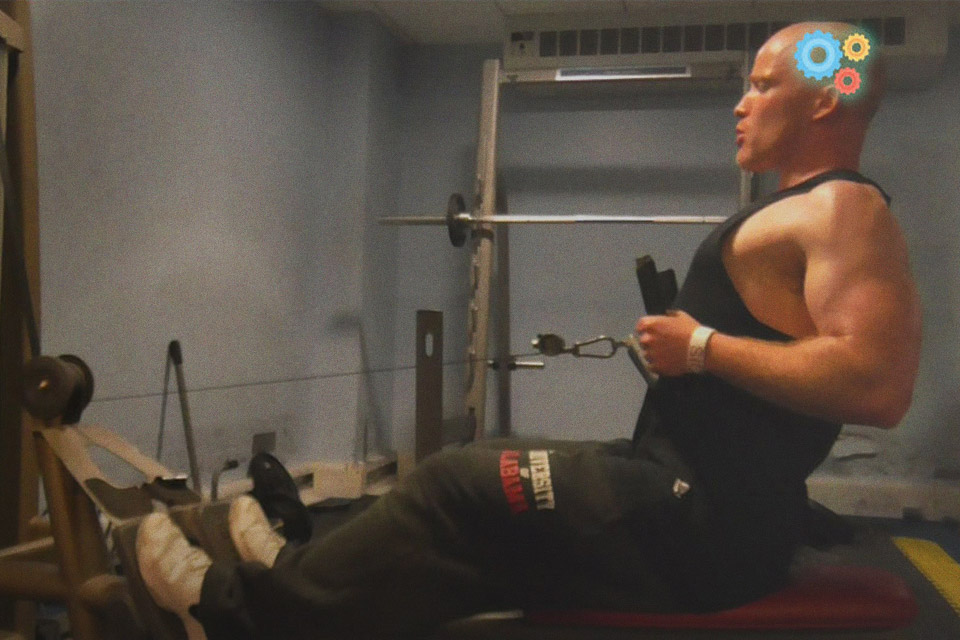
Lots of people feel guilty about taking time for themselves.
It gets particularly difficult when you have kids, a partner, work, bills, appointments, and seventeen other things waiting for the moment you sit down.
So the gym becomes easy to sacrifice.
“I’ll go when things calm down.”
The problem is that sometimes they don’t.
I learned this the hard way.
For more than six months, I completely removed training from my life. At the same time, I gradually stopped seeing people, stopped writing, stopped doing many of the things which had made me feel like me for most of my adult life.
Eventually my mental health went somewhere very dark.
I don’t usually write much about my personal life on here, but this particular story changed the way I think about exercise, parenting, and the importance of having something which belongs to you.
So settle back with a protein shake… storytime with Russ.
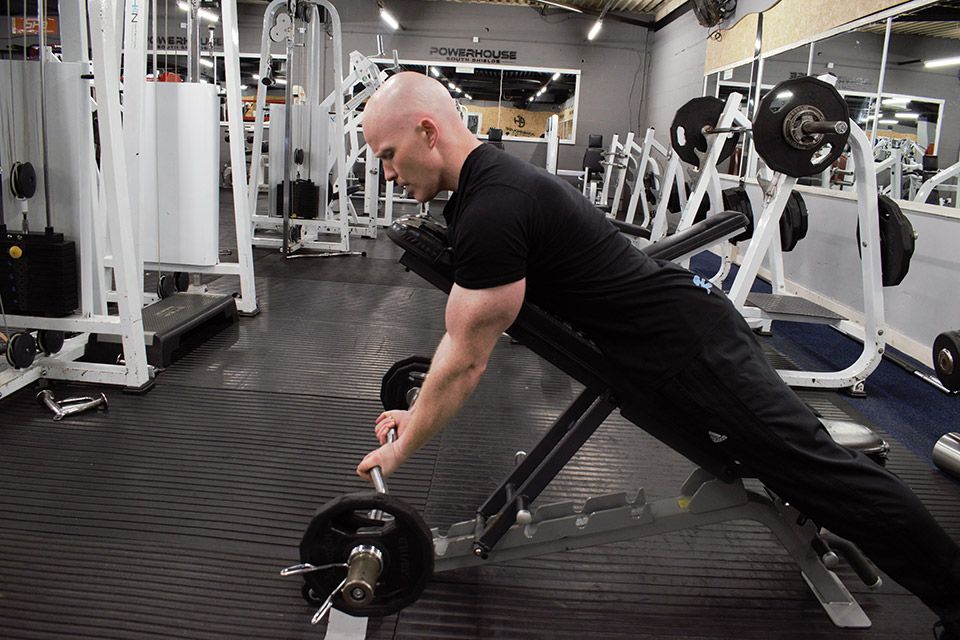
When my entire life changed
For most of my adult life, gyms had basically been my natural habit.
I’d spent more than 20 years working as a personal trainer, often doing ridiculous 13-hour days surrounded by clients, gym members, loud music, heavy weights, and general chaos.
Then the pandemic happened.
Gyms closed, everybody’s routines disappeared and, like millions of others, my life suddenly became much smaller.
I’d take my youngest son out for walks, train with whatever equipment was in the cupboard, work on RussHowePTI.com late at night, and try to make the best out of a surreal situation.
And, unexpectedly, I loved being at home.
So much so, in fact, that it led to a bigger decision being made.
When restrictions were lifted, my partner Sally suggested that instead of returning to my old PT schedule, I stay at home with the kids and run the website full-time.
It would mean we’d actually see more of each other, I could continue building my online business, and she’d finally have the opportunity to pursue her own career after spending years putting our family first.
Logically, it made perfect sense.
Emotionally?
Fucking terrifying.
Being a PT wasn’t merely my job — it was my whole identity.
But Sally had supported me while I spent years disappearing into gyms for most of the day, so this felt like the right thing to do.
I stopped taking PT clients.
She started the job she’d been waiting for.
And I became a stay-at-home dad running an online fitness business.
At first it felt weird as fuck — but good weird.
I assumed the hard part would be simply learning a new routine, but I had absolutely no idea what was coming.

I slowly stopped being me
It didn’t happen overnight.
That’s probably why I didn’t recognise it.
After a few months, I started struggling.
I’d gone from spending virtually every day surrounded by people, to spending most of my time inside the same four walls.
The kids’ schedules were relentless, housework seemed to reproduce whenever I turned my back on it, and somewhere in the middle of trying to adjust to everything, I began removing the things I considered non-essential.
My social life disappeared.
Then I stopped going to the gym.
At first, that seemed perfectly reasonable. I was busy. I had responsibilities. Going to the gym felt almost selfish when there were things I could be doing at home, right? So I kept putting it off, until weeks became months.
And the longer I stayed away from it, the harder returning seemed.
I had gained some weight and became increasingly self-conscious about it. That sounds ridiculous when you consider that I’d spent two decades telling people that nobody in the gym gives a shit what they look like, but apparently that advice becomes considerably harder to follow when the person feeling insecure is you.
Being a personal trainer added another layer to the problem.
In my head, I was supposed to look like a PT.
So instead of returning to the place which had been part of my life for decades, I became embarrassed about walking back through the door.
And I withdrew even further.

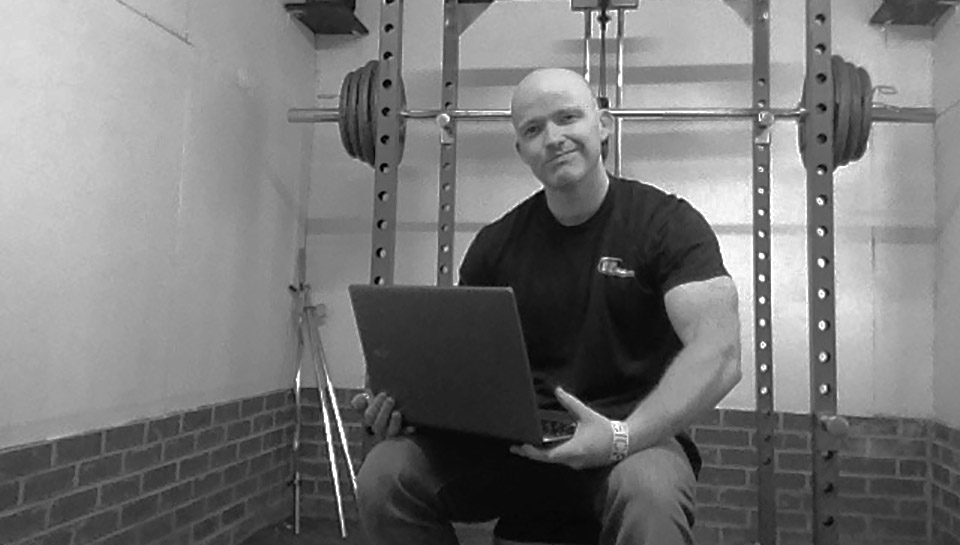
Then everything got harder
Around this time, our family went through another major change when our teenage son moved into full-time home education.
That became my new focus.
There was a huge amount to learn, and I poured myself into trying to make the situation work.
And, looking back, I think I also used it as an excuse to ignore what was happening to me.
I told myself:
I don’t have time to go out.
I shouldn’t leave him doing work on his own.
Going to the gym would be selfish.

There were obvious solutions.
I could’ve arranged things differently.
I could’ve gone to the gym when Sally got home from work.
But when you’re already withdrawing from the world, staying home becomes easier than confronting the reasons you don’t want to leave it.
So I stayed the fuck home.
And things got worse.
I became anxious about situations which previously wouldn’t have bothered me at all. Leaving the house became quite uncomfortable. Being around groups of people made me nervous.
Sally noticed that I seemed down.
I knew something wasn’t right.
And still I didn’t tell anybody.
Because apparently my preferred mental-health strategy at the time was:
Pretend everything is fine until it very obviously isn’t.
Fantastic plan.
The part I really didn’t want to do
Eventually, Sally encouraged me to phone our GP.
I hated the idea.
I’ve never been somebody who naturally talks about his feelings, and the prospect of explaining all of this to another person made me feel strangely embarrassed.
Even making the phone call felt enormous.
But I made it.
And it was probably the most useful thing I’d done for myself in months.
After talking everything through, my GP felt that the drastic reduction in social interaction and the way I’d gradually withdrawn from normal life were contributing to depression and social anxiety.
Then came the advice which, deep down, I already knew was coming.
Go back to the gym, Russ, you fucking dick.
Hearing it from somebody else made a difference.
So the next day, I did.
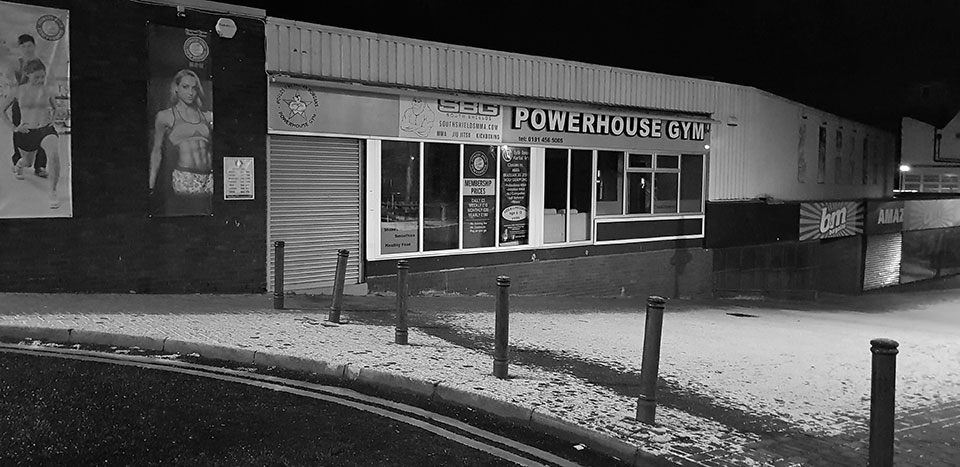
Walking back through those doors
I can still remember it.
It was icy and absolutely pissing down.
I walked into Powerhouse wearing an oversized hoodie, pale enough to have recently escaped from Mordor, and approached the reception desk feeling far more nervous than I care to admit.
I made sure to arrive for opening time (6am) so as to not give myself a chance to think.
The lad behind the desk looked up.
“Fucking hell, Russ! Where have you been?”
And almost instantly something clicked.
I had spent months imagining that everybody would notice how much shape I’d lost.
Nobody cared.
People were simply happy to see me back.
I spent the next half an hour catching up with various gym members who I hadn’t spoken to in months.
I trained.
I spotted people.
I listened to the weights slapping together on the bar.
I exchanged the traditional awkward “Alright mate?” with the old bloke who is always bottom-half naked in the changing room.
This whole day felt normal — and I hadn’t realised how desperately I’d missed normal.
It wasn’t just about the workout
I felt noticeably better after that first session.
But looking back, I think it would be too simplistic to say:
“Exercise released some endorphins and fixed everything.”
Exercise probably contributed.
There is now substantial evidence that physical activity can reduce symptoms of depression and anxiety, and resistance training appears to be useful too. (1, 2)
But the gym was giving me something else as well:
People.
I’d spent months progressively cutting myself off from social contact.
Returning to Powerhouse put me back into a community I’d unknowingly relied upon for most of my adult life.
And social connection matters.
Large bodies of observational research consistently associate loneliness and social isolation with poorer mental and physical health. The relationship is complicated, and I don’t want to reduce it to a simple cause-and-effect claim, but it’s there for all to see. (3, 4)
That first gym session gave me both things at once — movement and connection.
And, perhaps more importantly, it gave me a little piece of my old identity back.

Why “me time” isn’t selfish
This experience completely changed the way I look at taking time for yourself.
Before all of this, I thought being a good parent meant continually putting myself at the bottom of the list.
I would often hit the sprint track after 9pm, and feel wrecked the following morning when I turned up to PT people. But I had no idea how much worse things could get, until I hit this phase of life where “I’ll do it later” never arrived at all.
Of course, I’m not suggesting everybody needs a gym membership to be healthy.
Your thing might be running, or fishing, or football, etc.
Whatever it may be, it’s important to protect your “thing” — and to realise that it’s not an unnecessary indulgence, and it’s not selfish to enjoy some time to yourself.
For me, that was the gym.
Removing it from my life did not make me a better dad or a better partner.
It just made me a less happy version of myself.
Exercise helps — but it isn’t a magic cure
I want to be careful with this next part.
My experience was mine.
Going back to the gym helped me enormously, but that doesn’t mean somebody experiencing depression or anxiety can simply deadlift their problems away.
Mental health problems are complex.
Exercise can be one useful part of the picture, and the research supporting its role is increasingly strong, but people may also need counselling, medication, social support, or other forms of professional help depending upon their circumstances. (1)
That’s also why one of the most important things I did during this entire period wasn’t a workout.
It was phoning my GP.
I wish I’d done it sooner.
So if you’re struggling, don’t interpret this article as me telling you to grit your teeth and train harder.
The message is:
Don’t automatically remove the things which help you feel like yourself just because life becomes busy. Make time for the things you enjoy, because they’re more important than the surface-level experience suggests.
And if things continue getting worse rather than better, talk to somebody — seriously, I left it way too long.

Where I am now
It took time.
I didn’t walk back into the gym one afternoon and turn back into the person I’d been several years earlier.
But gradually, things improved.
Training became normal again.
Leaving the house became normal again.
Being around people became normal again.
I also started writing again.
And although that period of my life was fucking horrible at times, I think it made me a better coach.
Before experiencing it myself, I understood intellectually why people struggled to return to exercise after a long layoff.
Now I understand what it can actually feel like.
The embarrassment.
The anxiety.
The self-imposed guilt.
The feeling that everybody will notice that you’ve gained weight and laugh.
The strange ability to convince yourself that you’ll return next week despite having said the same thing for the previous six months.
I get it now.
And perhaps the most useful thing I learned was this…
Don’t feel guilty for having something that’s yours
If training gives you an hour where you feel stronger, happier, calmer, or simply more like yourself, protect that hour.
It doesn’t mean your family isn’t important.
It doesn’t mean you’re neglecting your responsibilities.
And it certainly doesn’t make you selfish.
Sometimes taking care of yourself is one of the things which enables you to do a better job of taking care of everybody else.
I spent months feeling guilty about the prospect of going to the gym.
Eventually, not going became a much bigger problem.
So if you’ve been putting off something which genuinely makes your life better because you feel you should always be doing something for somebody else instead, perhaps give yourself permission to stop doing that.
Your “me time” matters too.
Now go lift something fucking heavy.

You Might Also Like
Russ’ Rules to Ripped
Russ’ Holiday Training Guide
Six Reasons You Always Feel “Zonked”
References
Research behind this article.
Want to dig into the evidence? The studies referenced throughout this article are listed below.
View references — 4 studies
- Banyard H., et al. The Effects of Aerobic and Resistance Exercise on Depression and Anxiety: Systematic Review With Meta-Analysis. Int J Ment Health Nurs (2025).
- Chang Y., et al. Resistance training for depression: a systematic review and meta-analysis of randomized controlled trials. Front Psychol (2025).
- Sherman D. B., et al. A Systematic Review of the Relationship between Social Isolation and Physical Health in Adults. Healthcare (Basel) (2024).
- Gasull-Molinera V., et al. The impact of loneliness on mental and physical health outcomes: An umbrella review. Sermengen (2024).