
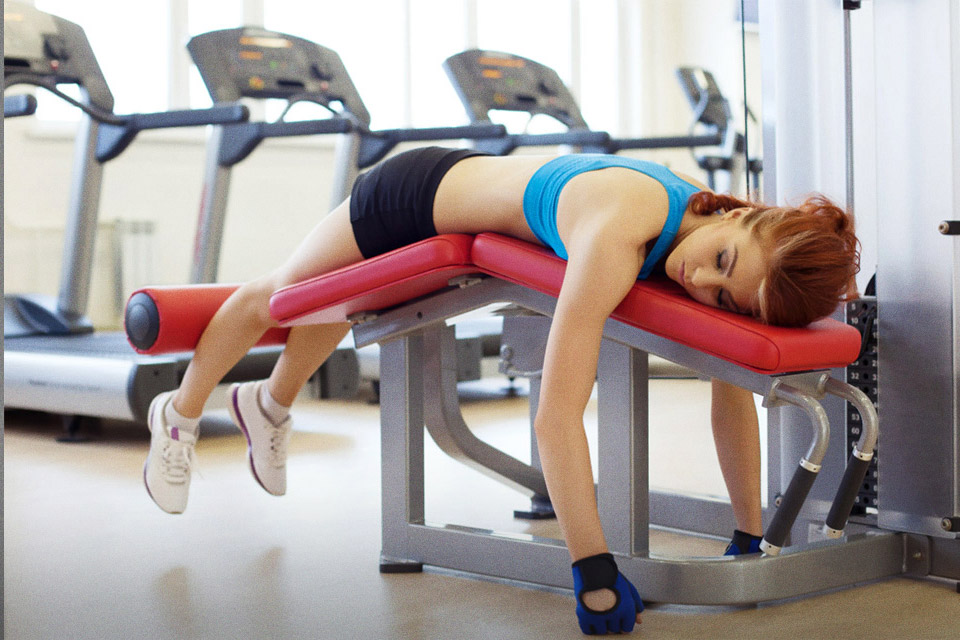
We all have days where our get-up-and-go appears to have got up and fucked off.
You struggle to concentrate.
Your workouts feel twice as difficult as they should.
Simple tasks suddenly require the kind of internal negotiation normally reserved for international peace treaties.
In the gyms where I worked, I coined a technical term for this condition:
Zonked.
Occasional tiredness is perfectly normal. Life is tiring.
But if you’ve been feeling exhausted for several weeks, you don’t know why, or it’s beginning to interfere with everyday life, don’t simply assume you need more coffee and a motivational podcast. Persistent fatigue can sometimes be associated with things like anaemia, diabetes, thyroid problems, sleep apnoea, or other medical conditions, and the NHS recommends speaking to your GP in those circumstances.
For the more familiar “I’ve felt like shit lately and my usual routine has gone off the rails” variety, though, there are several places I’d look first.

You’re not sleeping enough
Let’s start with the obvious one.
Because people will happily spend £60 on a supplement promising to improve recovery by 4.7%, then stay awake until 1:30am watching a man pressure-wash somebody’s driveway on YouTube.
Sleep matters.
And the old fitness cliché of “everyone needs exactly eight hours” isn’t quite right.
Individual requirements vary, but experts generally recommend that healthy adults get at least seven hours regularly, with roughly 7-9 hours being appropriate for most adults. (1)
The important word there is regularly.
One rubbish night isn’t going to destroy your gains, but consistently cutting sleep while forcing your body to train several days per week, work hard, deal with stress, and function like a normal human being is eventually going to catch up with you.
And there’s another problem here that most people miss…
When most people feel tired, they reach for caffeine.
Which interferes with sleep.
Which makes them even more tired.
So they consume more caffeine.
Congratulations, we’ve invented a really poor perpetual-motion machine.
So before looking for some exotic explanation for why you’re permanently knackered, take an uncomfortably honest look at when you’re actually going to bed.
Try this:
For the next week, give yourself a realistic opportunity to get 7-9 hours sleep. Go to bed at roughly the same time. Move caffeine to earlier in the day. And stop pretending that lying in bed scrolling through TikTok until 1am counts as a bedtime routine, motherfucker.

You’re not eating enough
This one is particularly relevant if you’re trying to lose fat.
There’s a weird badge of honour attached to aggressive dieting.
If 2000 calories produces weight loss, somebody inevitably decides that 1400 must produce even more weight loss, therefore it is clearly better.
Until three weeks later when their training resembles a hostage situation.
If you’re exercising regularly while repeatedly giving your body significantly less energy than it requires, reduced performance and poor recovery should not come as a surprise.
At the more extreme end, chronically inadequate energy availability in athletes is associated with a range of health and performance problems. Recent reviews have found links to poor endurance, concentration, coordination, and explosive output. (2, 3)
Fuel matters, and quality matters just as much.
The NHS recommends eating a varied diet, including at least five pieces of fruit and veg per day, alongside plenty of starchy carbohydrates, protein-rich foods, and fat. This becomes harder when calories are reduced, because we have less room to manoeuvre, so the lower that number goes, the more “perfect” you need to be in terms of food selection.
So, again, if you’ve been dieting hard and suddenly feel wrecked, ask yourself:
Am I actually eating enough to support what I’m asking my body to do?
Sometimes the solution isn’t another supplement.
It’s lunch.

You’re dehydrated
Water gets blamed for almost everything in fitness.
Headache? Water.
Bad workout? Water.
Girlfriend left you? Should’ve kept a litre by the bed, mate.
So let’s bring this back to reality. Dehydration absolutely can impair physical and cognitive performance, particularly as the deficit becomes more substantial, but the effects vary depending on how dehydrated you are, the conditions you’re exercising in, and what you’re asking your body to do.
Research generally finds that the biggest issues raise their ugly heads only when fluid loss becomes quite significant, around 2% of body mass. (4, 5)
You also don’t need to chug down the universal “3-4 litres of plain water every day” that gets bandied around the fitness industry.
Fluid requirements vary.
The UK guidance is a much more sensible starting point: around 6-8 cups or glasses of fluid per day (that’s about 1.5 litres), with more required when you’re physically active, in hot conditions, pregnant, breastfeeding, or ill. Tea, coffee, milk, and sugar-free drinks can contribute too, and food provides some additional water as well.
A wonderfully unsexy yet very practical guide is your urine — generally, aim for pale yellow rather than dark enough to resemble something produced by a malfunctioning coffee machine.
If you’re training hard enough and sweating heavily enough, obviously you’ll need more, but the point isn’t to spend your life attached to one of those annoying four-litre jugs that Influencers are always shamelessly trying to flog, it’s simply:
Don’t ignore this basic health requirement and then wonder why training feels horrible.

Stress is eating all your bandwidth
This was originally a section about financial stress, because I experienced that one personally during my early PT days.
But now I realise the principle is much broader.
Money. Work. Relationships. Caring responsibilities. Bereavement. Moving house. Family life. The unbearable weight of the fact that time is running out.
Stress is mentally exhausting — and to tie-in with an earlier point, one of ways it can hit you hardest is through sleep. Research consistently finds a link between psychological stress and poor rest, and financial strain in particular has been associated with a decline in both mental and physical health. (6, 7)
Then the knock-on effects begin.
You’re stressed, so you sleep badly.
You’re tired, so workouts feel harder.
You don’t feel like cooking, so you just grab whatever food is available on the go.
And then you compensate for this lack of energy with caffeine — which causes you to sleep badly again and restart the whole cycle.
It’s very easy to interpret all of this as:
“I’ve lost my motivation.”
When actually you’ve got twelve different things fighting for the same finite amount of mental energy.
I do not have a magic science-based “trick” for making the stress of life disappear. If I did, this section would presumably be written from my yacht. But I do think it’s important to recognise what’s happening. Sometimes backing off your training temporarily, or simplifying your diet down to a few basic rules, isn’t a sign of weakness or a lack of drive, it’s sensible workload management.

You’re using caffeine to hide the real problem
Caffeine works.
That’s why so many of us use it.
It can improve alertness, reduce the perception of effort and, in the right dose, improve exercise performance.
The problem begins when caffeine stops being something you use occasionally, and becomes the thing holding your entire day together.
You wake up tired.
You grab a quick coffee.
You still feel tired, so you have another cup.
Then perhaps a pre-workout before hitting the gym.
Then an energy drink in the afternoon, because your brain has started operating like Windows 95.
For a while, it works just fine.
Caffeine blocks adenosine receptors in the brain. Adenosine is one of the signals involved in building sleep pressure as the day goes on, so blocking those receptors temporarily makes you feel more awake. (8)
Yep, you guessed it; temporarily.
Caffeine can not replace sleep. It does not fix poor recovery. And it doesn’t erase the reason you were tired in the first place — it simply gives you a quick burst of energy.
This becomes an even bigger problem when addiction starts to take hold, because you’ll begin consuming caffeine products later in the day, which will have a negative effect on the quality of your sleep. (9, 10)
This puts you into a wonderfully silly cycle:
You’re tired because you didn’t sleep properly. You drink more caffeine. That caffeine makes it harder to sleep properly. And now you need more caffeine to wake up.
Excellent work.
By the way, I fucking love caffeine — I’m not suggesting you give up your morning coffee or throw away your favourite pre-workout supplement.
But if you’re permanently zonked while drinking caffeinated products from morning to night, try moving your final dose to much earlier in the day.
For someone struggling with sleep, leaving about 8 hours between caffeine and bedtime is a sensible experiment. And if you regularly need multiple energy drinks just to feel remotely normal, the most useful question probably isn’t:
“Which energy drink should I try next?”
It’s:
“Why am I so fucking tired?”

Your training and recovery no longer match
This one catches out enthusiastic gym-goers.
More training creates a greater stimulus for progress, but it also creates more fatigue.
Normally that’s fine. You recover, adapt, go again.
But your ability to recover isn’t fixed.
Maybe you’ve just started dieting.
Maybe work has become more demanding lately.
Maybe you’re not getting proper sleep.
Maybe you’ve added another three cardio workouts into your week because some luminous-toothed Oompa Loompa from social media started telling everyone it’s the only way to get visible abs.
Eventually, a workload that felt perfectly manageable a few months ago can become too much for your current circumstances. That doesn’t automatically mean you’ve developed a dramatic case of “overtraining”, it just might mean you need a quieter week.
Training-related underperformance can occur when the balance between workload and recovery becomes unfavourable, and low energy availability can compound the situation. (11)
So if your workouts have been getting progressively worse, everything feels unusually heavy and you’ve been piling more and more work on top, don’t immediately respond by training even harder.
Instead, reduce the workload.
That could mean taking an extra rest day. Or cutting a few sets. Or having a lighter week.
Sometimes your body isn’t asking for another motivational speech, it’s asking you to leave it the fuck alone while it recovers properly.
But before you do any of that, here’s an important question for you:
Are you really tired, or have you simply lost direction?
Because sometimes people say:
“I’ve got no energy for the gym.”
But they’ve got plenty of energy for everything else.
That’s different.
You may not be physically fatigued at all — you may simply be bored, directionless, or no longer interested in the programme you have been following.
Having a meaningful goal can help quite a lot.
When I was a PT, I used to teach clients the classic SMART system:
- Specific
- Measurable
- Achievable
- Relevant
- Time-bound
Putting your goal through this system can make it a whole lot more engaging and trackable — and we all love it when we can see progress! (12)
For example:
“Yeah, I want to lose some fat and build a bit of muscle.”
Would become:
“In the next 8 weeks, I’m going to train 3 days per week and build my incline treadmill walk from 20 minutes to 40 minutes.”
This gives you a concrete target with a deadline.
So if your body feels fine but you’ve lost all motivation for training, don’t immediately diagnose yourself with fatigue.
You might just need something worth training for.
Start with the boring stuff
The fitness industry loves complicated answers.
Because complicated answers can be sold in tubs.
But if you’ve been feeling zonked lately, I’d investigate the boring stuff first:
- Are you sleeping enough?
- Are you eating enough?
- Are you hydrated?
- Are you under a shitload of stress?
- Are you using caffeine to compensate for tiredness?
- Does your current training workload actually match your ability to recover from it?
Fix whichever of those is broken.
Give it some time.
And if you’re still inexplicably exhausted — particularly if it’s been going on for weeks, it’s affecting normal life, or you’re experiencing other symptoms — speak to your GP rather than trying to troubleshoot your health online.

You Might Also Like
Russ’ Rules to Ripped
Five Myths You’ll Hear In Every Gym
The Photoshoot Diet Template
References
Research behind this article.
Want to dig into the evidence? The studies referenced throughout this article are listed below.
View references — 12 studies
- Watson N. F., et al. Joint Consensus Statement of the American Academy of Sleep Medicine and Sleep Research Society on the Recommended Amount of Sleep for a Healthy Adult: Methodology and Discussion. J Clin Sleep Med (2015).
- Gallant T. L., et al. Low Energy Availability and Relative Energy Deficiency in Sport: A Systematic Review and Meta-analysis. Sports Med (2025).
- Mountjoy M., et al. 2023 International Olympic Committee’s (IOC) consensus statement on Relative Energy Deficiency in Sport (REDs). Br J Sports Med (2023).
- Wittbrodt M. T., et al. Dehydration Impairs Cognitive Performance: A Meta-analysis. Med Sci Sports Exerc (2018).
- Dube A., et al. Effects of hypohydration and fluid balance in athletes’ cognitive performance: a systematic review. Afr Health Sci (2022).
- Akerstedt T. Psychosocial stress and impaired sleep. Scand J Work Environ Health (2006).
- Samuel L. J., et al. Financial strain measures and associations with adult health: A systematic literature review. Soc Sci Med (2025).
- Reichert C. F., et al. Adenosine, caffeine, and sleep-wake regulation: state of the science and perspectives. J Sleep Res (2022).
- Gardiner C., et al. The effect of caffeine on subsequent sleep: A systematic review and meta-analysis. Sleep Med Rev (2023).
- Drake C., et al. Caffeine effects on sleep taken 0, 3, or 6 hours before going to bed. J Clin Sleep Med (2013).
- Kuikman M. A., et al. Markers of Low Energy Availability in Overreached Athletes: A Systematic Review and Meta-analysis. Sports Med (2022).
- Harkin B., et al. Does monitoring goal progress promote goal attainment? A meta-analysis of the experimental evidence. Psychol Bull (2016).