
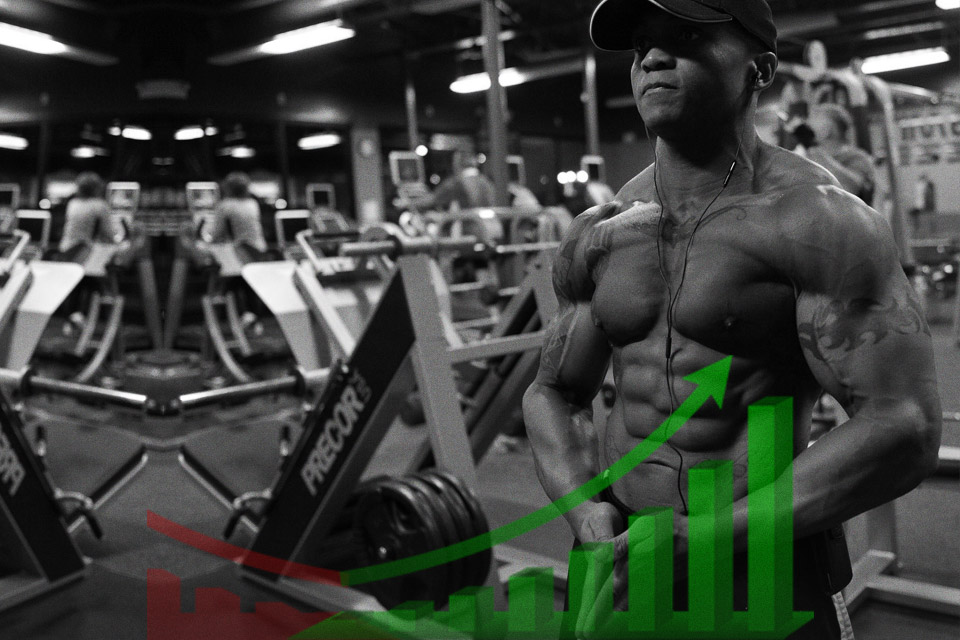
Here’s a simple nutrition plan to get you shredded for summer.
It uses a high protein, moderate fat, carb-cycling system that I’ve used in the gym with more than one thousand male and female clients, and it never fails to get results.
Before we jump into each phase of the plan in more detail, here’s a quick overview of the structure:
| Phase | Protein | Fat | Carbs |
|---|---|---|---|
| A (weeks 1-2) | 1.2g | 0.4g | 1.5g |
| B (weeks 3-5) | 1.2g | 0.4g | 1g |
| C (weeks 6-8) | 1.2g | 0.4g | 0.6g |
* all macro targets are “per lb target body weight”

| Phase | Protein | Fat | Carbs |
|---|---|---|---|
| A (weeks 1-2) | 1.2g | 0.4g | 1.5g |
A guide to phase A
Our targets begin fairly high.
This will provide you with an opportunity to see where you’re at right now in terms of energy output; some will lose weight in this phase because you’re burning a fuck-tonne of calories in your everyday life, and others won’t.
Whatver happens, don’t worry, because everybody will reach their goal by the end of this programme.
Before we start, we need to establish your goal weight. I want you to convert it into pounds and write that figure down. You’ll use this number to set the target for each of your macronutrients.
In the first phase you’ll be aiming for 1.2 grams of protein, 0.4 grams of fat, and 1.5 grams of carbohydrates per pound of TBW (target body weight).
If your goal is 180lbs, this would be your nutritional targets:
- 216g protein
- 72g fat
- 216g carbs
On top of these targets, I also want you to drink 3-4 litres of water every single day.
As well as helping you to perform better in the gym, it’s a pretty neat dieting technique, and once you get into the habit of doing this, it becomes second nature.
With regards to food selection, I encourage variety. You’ll do well to include plenty of lean meat, fruit and vegetables — the stuff you already know is great for you — but ultimately your diet is just a numbers game, so feel free to populate your targets with the foods you personally prefer. (1)
Finally, track your nutrition with a proper app, such as MyFitnessPal (free) or Carbon Diet Coach (paid but worth it).

| Phase | Protein | Fat | Carbs |
|---|---|---|---|
| B (weeks 3-5) | 1.2g | 0.4g | 1g |
A guide to phase B
Now we begin turning the dial.
Across weeks 3, 4 and 5 you’ll be making a slight reduction to your carbohydrate target.
Reducing it from 1.5g/lb to 1g/lb will create a slightly bigger calorie deficit for you to work within. You’ll still keep both protein and fat set as per last time out, to ensure you continue maximising muscle retention and new muscle growth. (2, 3)
So if your goal is 180lbs, your new daily targets would be:
- 216g protein
- 72g fat
- 180g carbs
Continue drinking 3-4 litres of water each day, too.
I personally enjoy this phase of the diet plan the most. It’s where clients tend to really get into the swing of tracking their nutrition, and start seeing some great long-term habits being formed with regards to portion sizes and consistency — and it’s also where results start to show!

| Phase | Protein | Fat | Carbs |
|---|---|---|---|
| C (weeks 6-8) | 1.2g | 0.4g | 0.6g |
A guide to phase C
The final phase calls for one more reduction to your carbohydrate target.
Throughout weeks 6, 7, and 8 you’ll shoot for 0.6g/lb.
Just like last time, this creates a slightly bigger calorie deficit for you to attack, and we keep both protein and fat set as they were in order to protect your lean mass and enhance physical recovery.
So if your goal is 180lbs, your new targets would be:
- 216g protein
- 72g fat
- 108g carbs
Continue drinking 3-4 litres of water, too.
Now, despite the fact it’s only been eight weeks, I expect you to achive a transformation that you’ll be very proud of. You can show me your results by tagging me on social media, or hitting me through the contact page.
This will be as far as most of you ever need to go, but those who are training for an event or a specific day, such as a wedding or a photoshoot, continue reading below.

Optional assistance for “peak week”
If you are training to look your best for a specific day (e.g. a one-time photoshoot), this section will show you how to mainupulate the end of the programme to help you “peak” at the exact right time.
It’s the same strategy I would use with somebody who was preparing for a magazine cover.
It involves adding a little extra into the formula during phase C, playing with your sodium and water intake, to help you flush unnecessary extracellular fluid (water that sits outside the muscle cell) and make you appear even leaner than you already are.
We’ll also tinker with your carb target during the last two days of the programme, too, because this is going to boost intracellular water (water which sits inside the muscle cell), which will make you appear even more muscular.
Here’s a step-by-step guide:
- Increase sodium at the start of week 7
The sodium/water ratio is a constant balancing act.
By consuming extra sodium at this stage of the programme, you’ll force your body to adapt to its new surroundings by increasing the amount of water that can be stored around the muscle cell. You might see a little bump on the scales here, but don’t worry about it — just follow your regular week 7 targets and choose foods which contain more salt or simply add your own. A decent sodium target here is 4000mg/day.
- Decrease sodium and drink more water at the start of week 8
At the start of the final week, we reduce your sodium to below 1000mg/day.
That’s a steep drop from last week, and this is where old-school bodybuilding-style dieting comes in very handy — simple foods like chicken, fish, and green vegetables will help you to smash your daily nutrition targes with minimal sodium intake.
This reduction puts your body into an adaptive state where extracellular water (water that sits outside of the muscle cell) is flushed out of your system, and you’ll look far leaner as a result.
We make this even more effective by drinking even more water than usual — increase your target from 3-4 litres per day to 6 litres per day.
Don’t worry, I know it sounds crazy that I’m telling you to drink more water when we want to flush unnecessary water from our body, but this will actually help you do just that. Additionally, water is a very effective appetite suppressor, so lifting your target during the final week — when calories are at their lowest — is a great way to increase your chances of staying consistent.
- Reduce carbs as low as possible for the first 5 days of week 8
As well as increasing your water and decreasing your sodium at the start of the final week, I’d like you to reduce your carb target as low as you can get it.
It’s already low, at just 0.6g/day, but aim for even lower.
You’ll still be training at this stage of the programme, so it’s worth adjusting your workouts to accomodate the fact that you won’t be feeling as strong as usual. I recommend switching to simple full-body workouts and avoiding heavy lifts entirely.
This sudden extra-reduction in carbs will force your body to flush out any stubborn unnecessary water that’s been hanging around, and it sets the stage for a real grandstand finish! (4)
- Reduce water and increase carbs for the final 2 days of week 8
Now you’re in the final two days of the final week, and it’s time to hit your peak.
I want you to flip the current approach upside down — suddenly increasing your carbohydrate intake (try 3g/lb), and reduce your water all the way down to 1.5-2 litres per day (note; reducing water can sometimes be hard, and even though you’re not going anywhere near what I would consider challenging, it’s worth knowing that if you feel headaches or dizziness just have a fucking drink and don’t be a douche).
So if your goal is 180lbs, your targets for the final couple of days would look like this:
- 216g protein
- 72g fat
- 540g carbs
- Drink 1.5-2 litres of water per day
By suddenly boosting your carbs, this will force your body to restock its depleted glycogen stores. One of the side-effects of doing so is that it’ll pull as much water into your muscle cells as possibe — which not only makes you look harder and more muscular, but also turns unwanted extracellular water into awesome intracellular water, making you look as shredded as possible. (5, 6)
Obviously, the higher carbohydrate target is NOT a cue to binge eat.
Remember, we are still trying to keep our sodium intake very low at this point, and we also want to avoid carb-based foods that absorb water, such as pasta and rice, becasues your body already doesn’t have a lot of water to go round.
That means you’ll try to hit this higher carb target with a pretty limited set of options. My advice is to keep it simple by adding white potatoes or sweet potatoes to your meals, and by snacking on Haribo Gold Bears (yes!) throughout the day. Those little bad boys do a great job of increasing your carb intake without impacting protein or fat, and they also operate as a good sweet tooth satisfier, which is fantastic in the latter stages of a challenging diet plan!
- Additional tips for your big day (if needed)
Following the advice above will get most of you to your big day in tip-top shape.
In many cases, it’ll be better condition than you’ve ever achieved before.
But I like to prepare for all situations, so this extra section focuses on what you should do if you wake up on the big day and feel a bit flat.
Some people would have you believe it’s too late, considering your photoshoot is merely hours away, but they are dead wrong — there’s always something you can do!
This situation would indicate to me that you’ve lost more water than we intended to lose, so your muscles weren’t able to “fill up” as much as we’d hoped from increasing your carbohydrates two days beforehand.
A person’s natural instinct upon hearing this would be to drink more water, but don’t make that mistake. This would encourage your body to start storing water and actually worsen the situation, so instead we keep your water intake low (1.5-2 litres) and increase your sodium intake to tip the sodium/water balance back in your favour, and then continue to monitor your progress throughout the remainder of the day.
One of the best ways to do that is to grab a burger from Burger King or McDonalds.
Those things are fucking loaded with salt, and they’ll easily fit your nutrition targets because you’ve bumped your carb target to 3g/lb.
The hardest part about doing this is NOT the burger itself, but the urge to drink water. Any high-sodium food makes us want to drink, but if we did so at this very late stage, it would lead to increased water storage, which is precisely what we don’t want.

Frequently asked questions
Q. Is there a preset list of foods, or do I just hit my daily targets any way I can?
I recommend gravitating towards lean meat, starchy carbs and plenty of vegetables because they’re awesome. Your diet is ultimately just a numbers game, though, so it can be built around your own preferences. In fact, I’ve found that doing so generally creates better consitency versus trying to eat a bunch of pre-written food that you fucking hate. Read this article.
Q. What should I do after the diet?
You’ve got two choices.
If this was in preparation for a big even (e.g. wedding day) then feel free to recharge your batteries with some time off. When you’re ready to go again, just open the members area and choose a new workout programme.
Alternatively, if you were just using this diet plan to get in great shape and didn’t really have an “end goal”, then I can understand why some would worry that suddenly bumping their number back up might result in regaining a bit of weight. You can get around this by setting up a “reverse diet” (phase C > phase B > phase A). Provided you continue working hard in the gym, this will help you retain your hard earned results without needing to stick to those phase C targets forever.
Q. What if I reach my goal before then end of the program?
This happens quite often.
Remember, this is just a template, so if you achieve your goals early there’s no need for you to continue into the next phase. It’s your body.
Q. Can I stretch this programme over a longer period of time?
Absolutely.
I made the plan 2 weeks, 3 weeks, and 3 weeks because this has people working at a fast enough pace to see quick results, and they like that. But if you’ve got longer to work with — or if you’re just enjoying one of the phases and wish to extend it — feel free to do so.
Q. Is phase A really necessary?
Yes it is.
Whenever I say “most people will see their results in the later stages”, a bunch of people make the mistake of skipping phase A and jumping straight in at the deep end.
Don’t do that.
The first phase is really important, because it sets the stage for what’s to come. You see, most diets fail in the long-term because people go too hard, too fast, and end up relying on sheer willpower rather than a solid strategy. Phase A gives you an opportunity to get into the habit of tracking your nutrition properly and training consistently, without the added stress of a calorie deficit.
When you reach the harder phases, you’ll have already mastered the basic skills that are going to get you across the finish line in better shape than you could’ve hoped for. (7)
Q. Is it okay if I eat the same foods every day?
Yes, it’s fine.
Some people prefer a rigid meal plan, and others like variety. The best diet is the one you can stick to, so just do what you enjoy.
Q. Should I use supplements?
Your diet will do all of the work here.
However, it you want to plug any gaps or make things more convenient, then you can add a few proven basic supplements into the mix.
I recommend a decent whey protein powder, a multivitamin, creatine monohydrate, and perhaps a pre workout to help you train harder.

References
Research behind this article.
Want to dig into the evidence? The studies referenced throughout this article are listed below.
View references — 7 studies
- Smith et al. Flexible vs. Rigid dieting strategies: relationship with adverse behavioral outcomes. Appetite (1999).
- Morton et al. A systematic review, meta-analysis and meta-regression of the effect of protein supplementation on resistance training-induced gains in muscle mass and strength in healthy adults. Br J Sports Med (2018).
- Whittaker et al. Low-fat diets and testosterone in men: Systematic review and meta-analysis of intervention studies. J Steroid Biochem Molecular Biol (2021).
- Kreitzman et al. Glycogen storage: illusions of easy weight loss, excessive weight regain, and distortions in estimates of body composition. Am J Clin Nutr (1992).
- Jensen et al. The role of skeletal muscle glycogen breakdown for regulation of insulin sensitivity by exercise. Front Physiol (2011).
- Acheson et al. Glycogen storage capacity and de novo lipogenesis during massive carbohydrate overfeeding in man. Am J Clin Nutr (1988).
- Ingels et al. The Effect of Adherence to Dietary Tracking on Weight Loss: Using HLM to Model Weight Loss over Time. J Diabetes Res (2017).
You Might Also Like
Russ’ Rules to Ripped
Russ’ Supplement Guide
My Newest Workout Programs